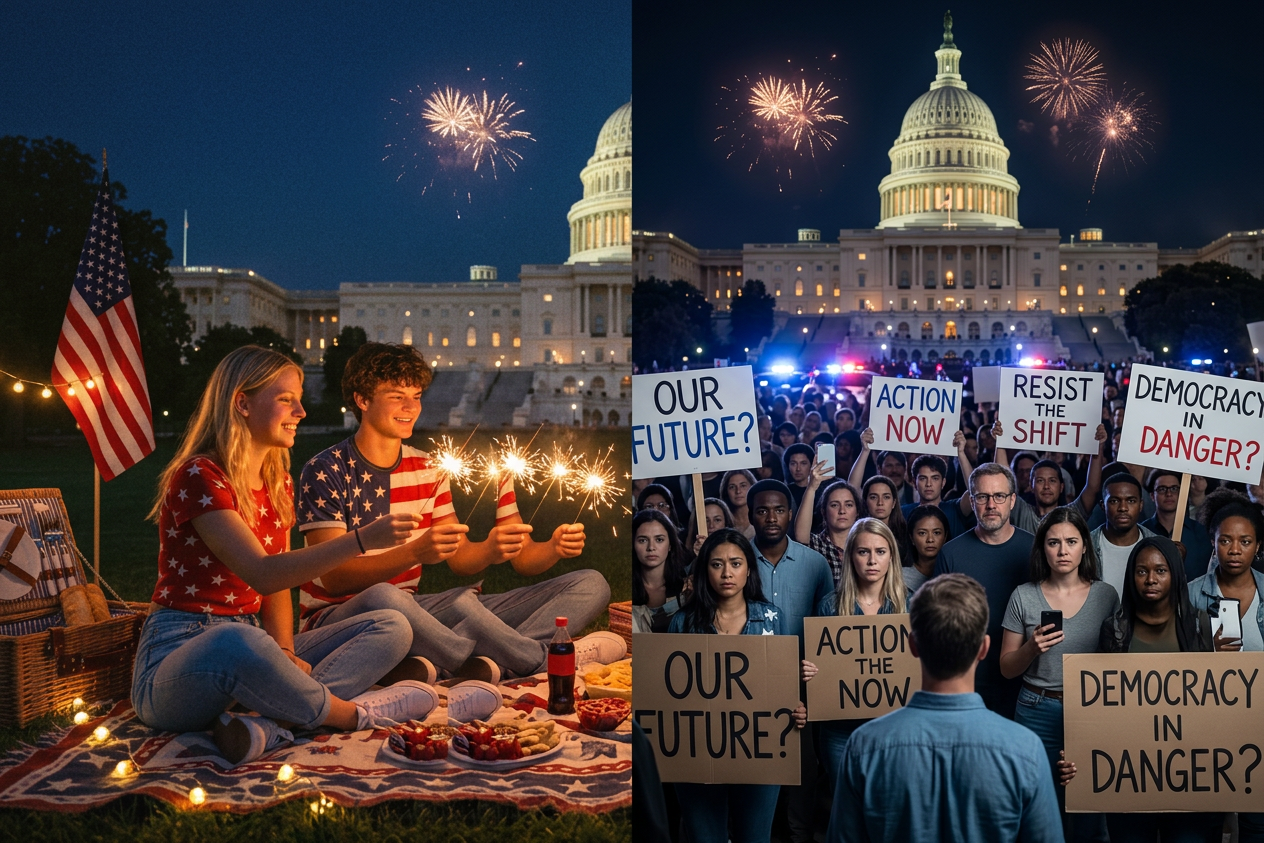
The Spirit of ’76 Through Today: A Personal Perspective

Dear Reader, this is a longer piece. I am working through thoughts that have weighed heavily on my heart as we approach our country’s 250th anniversary. 

1976 feels very different from 2026.

I was in my senior year of high school as the calendar turned from 1975 to 1976, our nation’s bicentennial year. “The Spirit of ’76″ became a defining phrase, capturing the mood of that time

People were excited long before that year started. There were celebrations planned across the country, and it felt like everyone wanted to be part of them. Stores sold all kinds of things to mark the occasion. I bought a 1976 Bicentennial license plate for my old yellow Subaru, which had faded paint and a rust spot above the back wheel. The plate was bright red, white, and blue, and it looked much better in my bedroom than on my unattractive car. So I never put it on the car.

In 1976, Gerald Ford was president. He took over after Richard Nixon resigned because of the Watergate scandal. Nixon’s own Republican Party pushed him to step down for his actions. Ford later pardoned him so the country could move on.

At almost 18, I enjoyed the excitement of the Spirit of ’76 during my senior year. I went to prom, ran track, spent time with friends, and took a weeklong trip to Myrtle Beach after graduation with some girlfriends. Gas cost 62 cents a gallon, so $5 would fill my tank. I didn’t think much about national issues. Politicians were supposed to look out for us; gas was cheap; my parents had steady jobs; and my car took me wherever I needed to go.

Every Fourth of July, we set off fireworks in the field above our house at the end of a dirt road. 1976 was no different. We had friends over, ate hot dogs and hamburgers, swam in the pool, and caught lightning bugs and June bugs. We lit Roman Candles and sparklers, using the sparklers to write our names in the air.

Life was easy, as summer days should be. It truly felt good.

A few years later, I moved into my own apartment and worked full-time. My paycheck was enough for rent, a car, and going out with friends. By 1979, there was a gas shortage. My parents and others were clearly worried. I heard it had something to do with the Iranian Revolution, but I didn’t really understand the details. We could only buy gas on certain days, based on our license plate numbers. My parents traded in the big Pontiac we used for my high school beach trip for a smaller, more efficient car. Families everywhere were switching to smaller cars to save money.

I began seeing the world from an adult’s perspective, worrying if I’d have enough gas to last through a week as I commuted to work. 

Jimmy Carter was the first President I ever voted for. He was in office during the gas crisis. It was a tough time for our economy. When he did a televised speech to the nation about saving energy, I could tell he was really worried. He told us to turn off the lights in the rooms we weren’t using. Around the same time, Iran took Americans hostage in November 1979. That event cast a shadow over the country and his presidency. He would lose the chance for a second term to Republican Ronald Reagan.

Reagan liked to show himself as self-sufficient, often pictured at his California ranch in a white cowboy hat, riding a horse. The National Rifle Association, which had previously stayed out of politics, supported him financially. Gun laws got weaker. His vice president, George H. W. Bush, succeeded him but lost after one term, partly because he raised taxes after saying he wouldn’t. Bill Clinton, a Democrat, took office in 1993, made gun laws stricter, and mass shootings decreased. The NRA then worked hard against Democrats in the midterm elections.

In the summer of 1994, I had been married for six years and was pregnant with my first child. I remember sorting baby clothes from a recent baby shower while watching the police chase O.J. Simpson on TV as he sped down a California highway in his white Ford Bronco. He was a famous former NFL player, I’d watched play football and appeared in Hertz commercials for years. He was suspected of killing his ex-wife. I couldn’t help but wonder what kind of world I was bringing my child into.

Little did I know that the event that would capture our attention for months as we watched the trial live on TV was nothing compared to the world that was evolving. 

In 1996, the United States hosted the Summer Olympics in Atlanta. It was a year full of celebration, and the excitement reminded me of the bicentennial during my senior year. People near Atlanta felt especially proud. Coca-Cola sponsored the torch relay, and my father-in-law, who used to coach football and track in Coral Gables, Florida, carried the torch through Asheville, N.C. where he and his wife had relocated to. My daughter was two, and my husband’s family was thrilled. We made “Go Ed” signs and cheered him on. He was interviewed by local TV and newspapers several times. It was a proud moment for our family and the country. Life felt good.

In 2001, when George W. Bush was president, terrorists led by Osama bin Laden attacked the World Trade Center and the Pentagon on September 11th. It was a difficult time for the country, but we came together. People bought so many flags there was a shortage. Almost ten years later, in 2011, President Obama announced that U.S. Navy Seals had killed Osama bin Laden in Pakistan. Everyone felt a sense of relief when they heard the news.

Barack Obama became the first Black president in 2009 and served two terms. He took office during the 2008 Great Recession and focused on fixing the economy. He also made health care more affordable. In 2015, the Supreme Court legalized same-sex marriage, and the White House was lit in rainbow colors to celebrate. I was happy for my LGBTQ friends.

When I was growing up in western North Carolina, we didn’t need air conditioning, and my first cars didn’t have it either. Sometimes, when the wind changed, I could smell the papermill from a town away, a reminder of pollution in the river. Hurricanes like Katrina in 2005 seemed to happen more often and cause more damage. Scientists started talking about global warming. As a young adult, I thought politicians were working for us: Nixon started the EPA, Carter created the Department of Energy and supported solar power, Clinton focused on cleaning up toxic sites, and Obama joined the Paris Agreement to cut emissions by 26%. These steps felt like progress for the environment. George HW Bush also supported environmental policies, unlike his predecessor and son, who rolled back policies.

In 2016, Donald Trump ran against Hillary Clinton and won the presidency. He had spent years spreading rumors that Obama wasn’t born in the United States. and was known as a wealthy businessman who had bankrupted several companies, even a casino. He insulted women, people of color, and people with disabilities, and his speeches spread prejudice and hate. These were just some of his negative impacts. His slogan was Make America Great Again, or MAGA. He started dividing the country, separating his supporters from everyone else. He called global warming a hoax and rolled back environmental protections so his billionaire friends could make more money. After he won, it felt like a darkness had falllen over the soul of our country. My husband removed our American flag from our front porch. There was an ample supply available unlike our country’s comraderie after 9/11.

2016 was the first time my daughter could vote. The morning after the election, we stood in our kitchen and cried together. We couldn’t understand how people could vote for someone so hateful and think he’d be good for the country. He hurt many government agencies, including the Centers for Disease Control. Then, in 2020, the pandemic hit the country and the world. 2020 was a horrible year. Trump said early on that it would be over by Easter, but he never said which Easter. It wasn’t until the next year that we started to come out of isolation and stop wearing masks.

Thankfully, Joe Biden was elected to replace him. But Trump, true to form, encouraged a violent mob to storm the U.S. Capitol on January 6th to try to overturn the election. I watched it on TV, and it was AWFUL. Today’s Republicans, unlike those in Nixon’s time, wouldn’t stand up to him and refused to impeach. Some of his supporters, including my local congressman, even claimed the attack was staged by the FBI.

Trump didn’t go away. He kept holding rallies and claiming the election was stolen. After many lawsuits, it was proven over and over that the election was fair. Still, he kept repeating the lie. In May 2023, he was found civilly liable for sexual abuse and had to pay $5 million in damages. In May 2024, he was convicted in New York state court of 34 felony counts for falsifying business records, including paying $130,000 to his former attorney to cover up a payment to an adult-film star for her silence.

Still, in the next presidential election, Kamala Harris, who had been Biden’s Vice President, lost to Trump, even though he was now a convicted felon and rapist. It seems this country just can’t elect a woman. Since coming back, he’s done physical damage to the White House, tearing down the West Wing, pouring cement over the Rose Garden, removing the flowers for a big patio, and threatening to build an arch that would block the view of Arlington National Cemetery. His family businesses are making billions, his tariffs have made prices soar, and his Big Beautiful Bill cut Medicaid, other social services, and veterans’ benefits. He’s also weakened or removed regulations, including OSHA, making workplaces less safe. This is just a small part of the harm he’s caused.

And now here we are, about to “celebrate” July 4th, 2026. It feels like a lifetime since 1976, when life was carefree and we celebrated the country in a big way. Back then, my biggest worry was finding gas during the 1979 shortage, when prices hit $1.25 a gallon. Now, housing is so expensive that even my grown daughter, who earns a good salary, struggles to pay rent. Right now, Trump—who I call the felon in charge—has started an unnecessary war with Iran, and gas prices in the Charlotte area are jumping between $3.50 and $4.90.

Before Trump, July 4th was always a day to celebrate. I won’t be celebrating this 250th anniversary. On top of everything else he’s done, Roe v. Wade has been overturned, and some states are trying to stop women from getting medical care if a pregnancy goes wrong. White Christian Nationalism is growing, and people I call friends are supporting this buffoon.

I’m more involved in politics than I ever imagined. I go to protests, write postcards to encourage people to vote, and attend events to meet candidates and help with campaigns. I even stepped out of my comfort zone to knock on doors for a friend running for Congress. I try to speak the truth to counter all the propaganda, which has gotten worse since Reagan made it possible for Fox News and other so-called news outlets to spread lies and half-truths.

This unexpected activism keeps me busy and connected with others, but it’s not how I pictured my retirement. Still, here I am, like so many others, wondering, “How did we get here? To this?”

Now that I’ve written it all down, I can see a lot of the path that led us here.

When I was younger, I believed our leaders wanted the best for everyone and that we were always trying to improve, no matter the political party. We weren’t blue versus red or Democrat versus Republican, we were Americans. I don’t see that kind of leadership now. And this country is very divided between MAGAs and all others. How can we ever get back to those times when we felt hopeful and safe, even if things weren’t perfect?

How indeed. The only answer I have, that I repeat to others, is 

Vote blue or lose.

Heaven Can Wait

I grew up in rural western North Carolina, where the closest grocery store was a 15-minute drive, but Baptist churches were on every corner. They dotted the roadside like watermelon seeds embedded in the sweet juiciness of family activities. The devout families attended church every time the doors opened–Sunday morning and evening, Wednesday evening, revivals (that were nightly for weeks at a time), homecomings (a long sermon followed by a potluck lunch), and choir practice. My family, unlike many families that usually had the male as the only working parent, had both parents working. Because of my parents’ busy schedules, we were not devout attendees. Sunday mornings were our only usual visits. 

Thank the good Lord.

But those weekly Sunday sermons were almost too much; I was covered in indoctrination of a fear-based religious environment, which instilled fear of going to hell. Each Sunday, we heard the threats that hell awaited if we did not profess our belief in Jesus Christ. The service ended with the preacher waiting at the front of the church, encouraging us to come forward publicly to repent of our sins, profess our faith in Jesus Christ, and thereby be saved from the perils of hell. Often, the preacher extended the service well beyond the hour time slot that was supposed to end at noon. He would implore the pianist,

“Play one more verse. I feel God calling someone to come forward.” His continued dialogue asked the question, “Where will you be in eternity–heaven or hell?” The preacher’s overtly loud voice espoused fear for all the lost souls that hell awaited if someone did not come forward. This could go on and on for several song verses if no one came forward.

I fidgeted with impatience and prayed. “Please let someone come forward so we can go home.”

I was eight when I made my profession of faith. Many of my peers had made their profession before me at an even younger age. I was eight freakin’ years old. What could I possibly know about what giving my life over to an entity I barely understood means? Rational choice is formulated through our frontal cortex, which is not fully developed until our mid-twenties. But there I was at the age of eight, telling the old white-haired preacher with a high-school education who had received God’s call to preach at some point in his early life, that I wanted to be baptized. As I focused my gaze on my patent leather shoes, avoiding looking at him, he asked if I had accepted the Lord as my savior. As I shyly replied, “Yes, sir,” he promised the still waters of Jesus’ religious harmony would make life better. Life was going to be great from that point on. 

On a summer Sunday, another young girl and I were dunked into those life-saving waters of the church’s baptismal pool. With the eyes of many looking at us from the sanctuary, it was nice not to be the only one being watched as I spewed and spat water when I came up for air after the infamous change-of-life dunking. I was supposed to emerge different. When I came out of those waters with no permanent drowning problems, the noticeable difference was, 

I was wet. 

But I was happy. Or maybe it was relief. Life was going to be better, and I was not going to go to hell. Not that I was worried about dying anytime soon. After all, I was eight. I would live a long time, like that old preacher. My parents and many other adults were proud of me. Life, however, went on as usual. The baptism didn’t fix the brokenness of my shy, insecure self, who felt like a foreigner in a rural land that was stuck in the religion of hell prevention. 

As it turns out, an in-ground pool my parents had built in our backyard during my seventh-grade summer was the actual life-saving water.  The pool saved many of us from life’s boredom and isolation. It molded friendships with several friends who lived within walking distance and visited regularly each summer. Years later, at a high school reunion, a friend who frequented our pool recounted fond memories of her time at our house. It was a reprieve that saved her from an alcoholic father, a fact I didn’t realize had been a component of her life. She told me how, when her children were young, she drove them to our house to show them where she had spent many wonderful summer afternoons. I had no idea of the impact of those summer visits until she shared that with me. I realized with that conversation—

There are soul-saving pools of water that aren’t in a church.

 I left that small town in my early twenties, moving to the large city of Charlotte, NC. I met my husband there. After marriage, we started attending a progressive Baptist church where the preacher had a doctorate in theology, and women were allowed to be deacons and ministers, something you will never see in a fundamentalist church. Life lessons and helping those in marginalized communities were the sermons’ core. This church encouraged questioning my faith, which was the path towards growing my faith. As for the baptism ritual, the youth of the church participated in baptism, but usually their ages were late high school or early college, and it wasn’t a hell-prevention tactic. Just a simple profession of a belief in a higher power whom they want to model their life after. 

My life in rural America had always felt challenging. When I returned to visit my parents, who lived in the house I grew up in until they passed away, I always felt a disconnect from the surroundings. I had never felt I belonged in the rural environment that worked for my parents. Relocating to a metropolitan area and attending a progressive, larger city enabled me to interact with people of other races, cultures, and religions. It was easy to call this large city and the progressive church “home.” Home is where you sense you belong. 

Why do churches focus so much on the afterlife status? Why aren’t we concerned about our earthly life? There is living to be done here and now. Many things baptize us towards an enhanced life. Travel educates, enlightens, and reveals much. When I was 14, on a family trip, I visited Yosemite and the Grand Canyon National Parks, which were created millions of years ago. As a result, I realized the seven-day creation story was a metaphor, not literal. Travel also taught me that there are a variety of ways of life and religions across our broad country. 

Throughout my adult years, I have been hungry to learn about the healing of the spirit, because mine had consistently felt broken. Reading philosophers, psychologists, and mystics proved enlightening. A good psychologist is also a connection most of us need at some time in our lives. Being dunked in those “life-saving waters,” with its emphasis on the afterlife, doesn’t fix life’s scars. That takes extra work on our part.  When Christians who have claimed to have found Jesus, believing they are “healed,” and seem to think everything is fixed, are not completing the spiritual and emotional work that is needed. We carry ourselves with us wherever we go, and the wounds of life need some medical attention. Jesus may be the required band-aid initially, but until the wounds of life are cleansed and treated thoroughly, the infection is still there.

These days, much of what I see from religion is condemning people because of cultural differences, whether they are a Jesus believer or not. I am a Caucasian, heterosexual female. I am appalled at good Christians judging the LGBTQ+ community and immigrants. No loving God would be condemning those he/she created. The ‘good’ Christians seem oblivious to the similarities they have with the groups Jesus criticized — the judgmental-pompous religious leaders, the Pharisees, and the Sadducees. These good Christians, with all their pious judgments, want to convince us we are going to hell if we don’t live a life the way they deem is correct. I think Jesus would disagree.

Where is God/Jesus/Higher Power? In heaven, waiting for us? I think not. My faith journey from those fundamental roots of rural America, to broadening my world view through interactions with many, has led me to believe that God/Jesus/Higher power is not external, but internal. We are spiritual beings having a human experience. The spirit lives within us. But to tap into that spirit is a process of peeling back our life wounds to get to the core of who we are. That takes ongoing work. Emphasis on “ongoing.” 

Let heaven wait. What value is there in worrying about what it takes not to go to hell? It’s the here and now where we need to focus on making a difference. Enough of judging others who are unlike the mirror’s reflection. For those who cherry-pick Bible verses, I refer them to the short scripture of “Judge not.” 

We are in challenging times here in the United States. Much of religion is playing a negative role with the I am right, you are wrong attitude. It’s time for a spiritual, internal renewal. A time of reflection and introspection to heal ourselves. How do we love others as ourselves if we don’t love ourselves? 

What will bring peace to our human spirit—a baptismal pool of a church or sharing a pool in a backyard where a young girl finds safety and security from a challenging home environment? If we work towards healing our wounds/brokenness, love all others, be kind and do kindness, when our time comes for the hereafter, I believe we will then —

rest in peace.

Praying to an external being

Ripple Effects

“I alone cannot change the world, but I can cast a stone across the water to create many ripples.” — Mother Teresa

Smile or frown
Kindness or meanness
Hug or push away
Eye contact or avoidance
Hold the door to let someone enter, or let it slam in someone’s face
Call/text/email/ visit or ignore
Accept or judge
Skim a rock across a pond or drop a rock into the mud

One of my favorite things to do when near a lake or pond is to stand at the edge of the shoreline, find a small rock to place between my index finger and thumb, and fling the rock outward, skimming over the water to see how many times it will bounce. As the rock connects with the water, a ripple effect begins. And with each point of contact, the ripples spread, creating an expanding water fan. Eventually, the rock’s momentum stops and sinks, but the ripples continue, glistening in the sun.

Kindness is one of the best things to skim out across the paths of others, creating ripple effects. For example, aren’t you pleasantly pleased when someone holds the door for you as you enter or exit a building? Maybe you notice yourself feeling emboldened by that small gesture. Or have you ever been somewhere, like the grocery store, where a stranger helps you retrieve an out-of-reach item from the top shelf, and you have a light-hearted conversation that enhances your spirit? The kindness and conversation make you feel good, and a smile appears. Then, when you pay for the groceries, you share your smile with the cashier, and the cashier’s day is better. And, without realizing that their spirit lightened up a bit because of your smile, the cashier, in turn, smiles at the person next in line, and that person feels a sense of kindness. And they have no idea it all started four persons ago because someone took a moment to help another.

Unfortunately, the craziness of our world can have the opposite effect, with deranged ripples that resonate as we deal with problematic people and situations. People often promote maniacal outbursts and shoot arrows of meanness via social media. Social media spreads things faster than a California wildfire fanned by the Santa Anna winds. Media constantly pushes negative chaos toward us. Crazy is happening all around. Immigrants are being blamed for a lot of bad things happening in our country, even though statistics show most crimes happen by U.S. citizens. Many “good” Christians judge persons who identify as LGBTQ+ and refuse to do things for them, like a bakery refusing to provide a cake for a gay couple. Guns are fine even though they are the number one cause of death for children in the United States. However, a TikTok app, which young people use for many things, is threatened to be banned by the government for its political influence. Some people are happy a wanna-be dictator is now in charge of our country. Many of them wear red hats that say, Make America Great Again. I am not sure how a dictator makes America great again, if it ever has been great for the marginalized, but here we are.

The squirrels must be happy because there are nuts everywhere.

I don’t want to be part of the squirrel-feeding frenzy. I want to be part of the ripple effect where sanity and goodness vibrate over life’s waters.

Do you think smiles, kindness, hugs, interaction, door-holding, baking cakes, and connecting with people are the smooth rocks we can send toward the lives around us that land softly and ripple forward? I feel helpless in so many ways as I witness so many rights and privileges for the marginalized taken away by the recently elected U.S. president. I want to figure out how to create positive ripple effects in my small corner of the world—speaking and sharing truths, offering a safe place for those living in fear because of their lifestyle.

Today, because of my heavy heart and concern for the marginalized in this country, I did something that I hope made a slight difference. While doing some errands, I saw a guy on the street corner with a sign that read, “Homeless. Please help. God Bless.” I rolled down my car’s window, found my wallet, and placed a twenty-dollar bill between my index finger and thumb, reaching it towards him. It skimmed the air as it landed in his hand, and I watched the ripple effect of his smile and grateful eyes as they met mine. As skeptical as I can be of people who can stand for hours on a street corner, I decided if I made an error in handing over cash to this person, I have erred on the side of grace and prayed he would remember our eye contact and my breath prayer to him of, “God Bless.” I can only guess how the ripples expanded once the money connected with his hand. I hope he will use the funds well, like having a warm cup of coffee on a cold winter day, possibly sitting beside another person he can offer to buy a coffee for. They’ll both feel the ripples that make their hearts smile, and the smile will show up on their face, and they, in turn, send out other ripples into the world.

There is much to be concerned about as we stand on the shoreline of the days, months, and years ahead due to what is happening politically in the United States. Many of us feel like a whirlpool is sucking us inward towards a dark abyss. The lifejackets that prevent people from drowning may be the ripple effects of kindness we each send across the lakes and ponds of life. I am only one person, but I intend to send positive vibrations that ripple towards others. If you join me, we can generate multiple ripples and create a wave of protection for ourselves and others. I don’t know what rocks precisely I will pick up to skim forward across the lakes and ponds of life, but one thing is for sure,

I won’t be feeding the squirrels.

Transforming Thoughts with Creative Metaphors

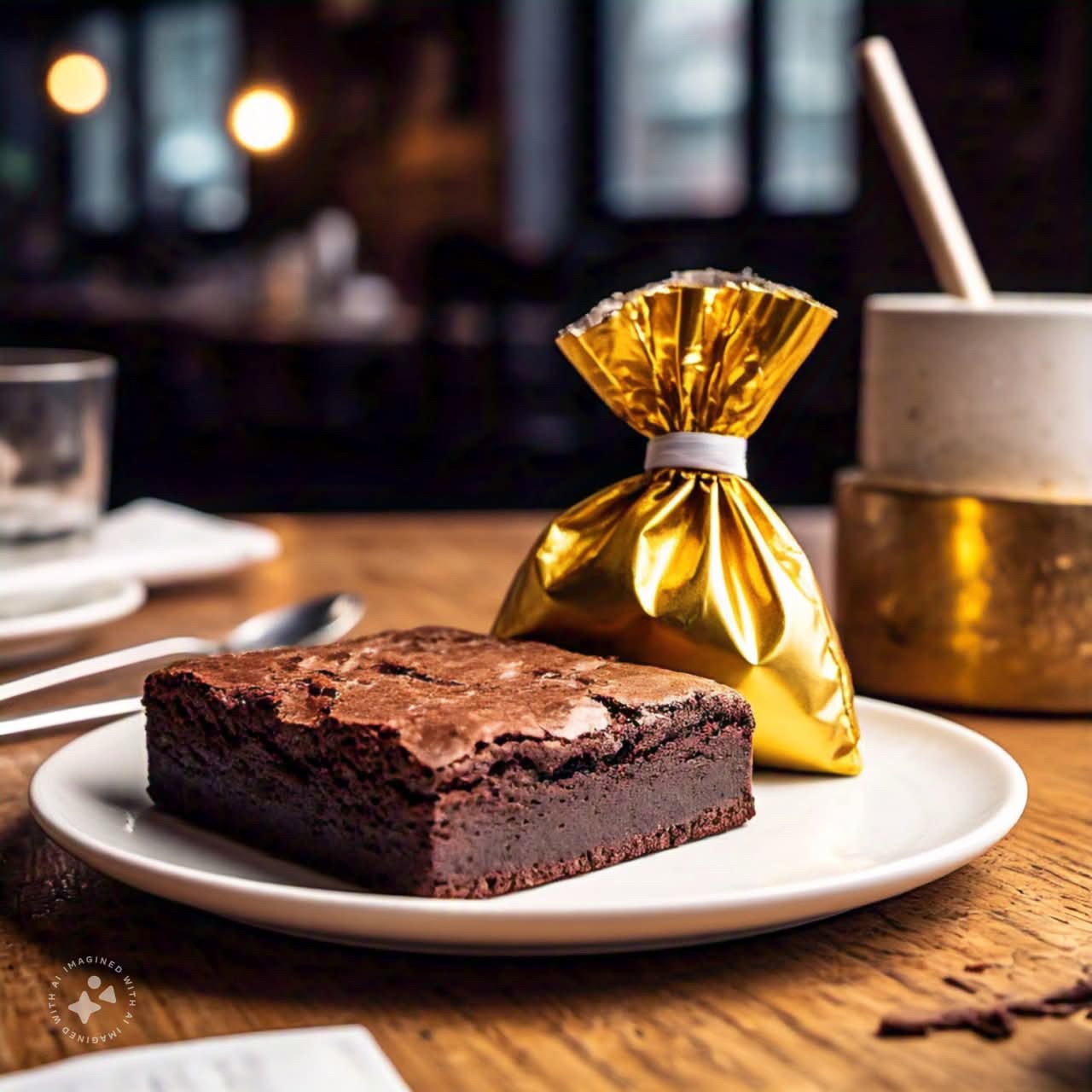
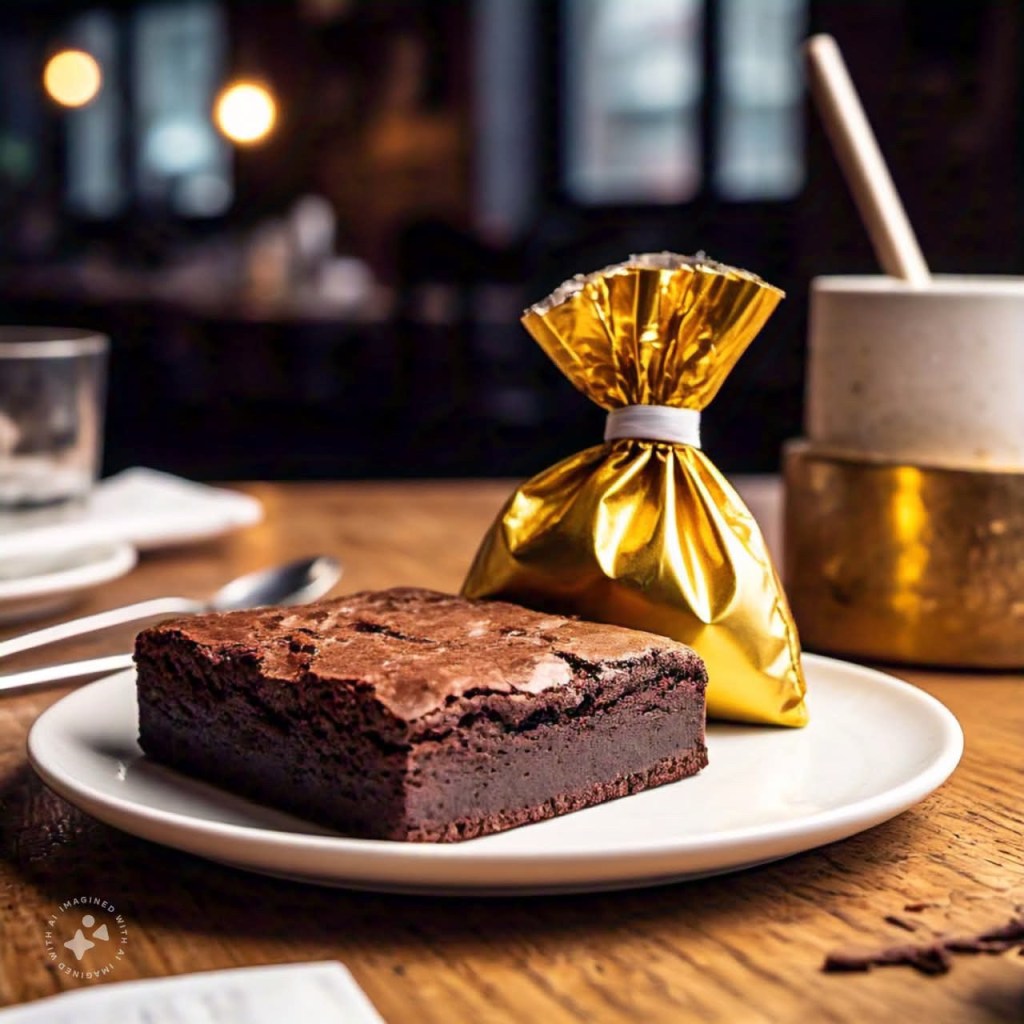
A brownie is boringly sweet until it becomes rich, like Rockefeller.

My dad always seemed to have metaphors for many situations. He passed away in 2020, and I regret that I didn’t manage to write down more of his clever sayings. I am unsure if he used ones he heard elsewhere, made them up, or possibly both.

One afternoon, he was eating a dark chocolate brownie when he explained, “This brownie is richer than Rockefeller.” I laughed at him, understanding the reference to one of the richest men who lived years ago. 

There was a time when my elderly dad, using a walker due to aching hips, rose from the living room sofa to head to the kitchen. He grabbed his walker and quipped, “Well, I’m off like a herd of turtles.” His use of a metaphor made light of his situation, adding a touch of humor to a difficult time of his life.

One of his favorite sayings when describing confusion was, “If your feet smell and your nose is running, you might be upside down.” Confusion does seem like being upside down.

When I was in my early twenties, I told my dad about a guy I knew who didn’t want his wife-to-be to wear make-up, and my dad said with southern drawl emphasis, “A little paint on the ol’ barn never hurt nothin’.” Because of this symbolic saying, I wear eyeliner and mascara daily, even when I have nowhere to go.

Metaphors enhance writing and conversation, which is why I enjoy authors like Anne Lamott and Elizabeth Gilbert. One of my favorite metaphors in Elizabeth Gilbert’s memoir Eat, Pray, Love is when she wants to help a struggling family. She writes, “I wanted to valet park them into a better life.” She could have easily said, “I wanted to help them.” However, creating a metaphor enhanced the message and readers’ understanding of how much she wanted to help.

And Anne Lamott’s books are loaded with metaphors. One I can relate to very well is, “My mind is a neighborhood I try not to go into alone.” Many of us need other people to help us with our mind’s neighborhood, especially when we enter the poverty area of negative thinking.

Things can always be described in a straight line to get to a point, but with a metaphor, your brain detours to a pivot point called “ah ha.” Metaphors make us think about things from a different perspective. Jesus, Buddha, Rumi, and other profound philosophers used them to provide ah-ha thinking and make us sense the message on a level of relevance that short, to-the-point wording doesn’t offer in their black-and-white, no-color perspective. Words that transform into metaphors are like a caterpillar transforming into a butterfly. The enhanced beauty is significant.

Since we have just begun a new year, I am working on my New Year’s resolutions in metaphor style. See if you can determine their one- or two-word description:

  • Eat like a gardener instead of a ranch hand
  • Chisel the excess fat away one block at a time 
  • Use up my writing pens’ ink 
  • Unwrap shelf space hidden by the unnecessary 
  • Obtain a new view for my workplace’s window 
  • Achieve more passport stamps

Or I could have said:

  • Diet
  • Exercise
  • Write more
  • Declutter
  • New job
  • Travel

Metaphors– they magically stir the message that bakes a word-cake as rich as Rockefeller.

Or I could have said, “Metaphors are cool.”

Sense the difference?

May the new year explode with fireworks of happiness and health.

Or I could say,

Happy New Year.

Carol Injaychock

January 2, 2025

Joy

No one can infiltrate the things that bring you joy because joy springs from within, and happiness lives outside ourselves. – author unknown

The best description I can provide of people with an innate capability for consistent joy is that they are reincarnated angels who have managed to keep their spiritual glow. Their internal glow of joy, seems to be of the mystical world.

Children are great examples of angelic joy, especially this holiday time of year. Everything is exciting. They revel in being alive, their eyes aglow, and their smiles rampant. They are riveting in joy when they perform a song on stage with their peers singing Jingle Bells. There will be at least one doing a dance that may look like they are doing spurts of squats, with a huge smile showing their missing two front teeth. When we see that child dancing, we have discovered the lead angel. Do you think maybe these little angels, once grown, forget who they are, or did we adults or life circumstances suck it out of them along the way? Were you once an angel? Was I an angel once upon a time? I hope so.

I’ve often confused joy with happiness and lumped them into the same bucket, treating them as though they were not different.

But they are—different, I mean. As the quote at the beginning of this blog indicates, joy is part of our core self, while happiness is a result of something external happening. I struggle to identify with joy. It doesn’t continuously live within me. Then again, maybe I’m expecting too much to think it should always be a part of my being.

Think about the people in your life whose presence exudes joy. Their eyes sparkle; their smiles are genuine; and their spirit is infectious. We may not always be aware of it, but their joy is palpable and enriches our own lives.

I have found a few adults who, despite their experiences of boulders being tossed onto their shoulders, their spirits still shine, with their eyes all aglow. I can think of three ladies in my life who exuded joy and impacted my spirit. Their joyful presence brought me happiness and helpfulness.

Virginia: An adult mentor during my teenage years. She battled a life-threatening cancer. Intense treatments went on for a couple of years. Whenever I saw her, though, her eyes sparkled, and her smile was bright. She had an intense faith and credited faith for sustaining her throughout the ordeal. Her resilience was a source of inspiration for me.

Cindy: We met the day she finished her chemo treatment, and I began mine at what we called “The Drip Lounge.” We were the same age of 45. Her sparkling eyes and smile were evident the moment we introduced ourselves to each other. A friendship ensued. Several years later, she would tell me, “The cancer has metastasized.” She didn’t go into a poor-pitiful-me mode. As I sat on the end of her sofa where she lay during her final days on earth, we talked, and she managed to smile.

Joy: Yes, that’s her given name. I call her “My Joy-Joy.” I’ve known her through interactions with church activities for many years. You’ll be glad to know she didn’t or doesn’t have cancer. She is in her eighties now and doing well. When she smiles, her eyes twinkle. As it is for most of us, life has thrown her some serious boulders to carry, including the death of a young daughter who was born with a disability. When I interact with her, I feel my heart lighten. I find myself talking to her with ease. I feel happy and heard during our conversations, much like I did with Virginia and Cindy.

These three maintained their joy in spite of all they endured—at least, it seems that way. I don’t know how they and others who have suffered from anguishing experiences hold onto joy in their spirits, but it seems there are those who hold onto their internal joy.

Is it a faith thing? An attitude thing? A combination of both? All three of these ladies were people of faith. But I know many faith-based people who don’t consistently exude sparkling eyes and upright smiles of joy, including me. I can give you plenty of excuses for not having ongoing joy exude from my being, but for now, I’ll spare you. But, my life burdens don’t come close to dying young, or burying a child.

As I write this blog, I struggle to dissect this phenomenon of joy. But here’s what I’ve come up with:

Hope – a better day awaits.
Love- given and received cures most anything.
Friendships -sustain us.
Connection – with people that surround and support us.

Is it all of the above? Virginia, Cindy, and Joy were connected to people. They loved, and were loved by their people from church, friends, and family.

It seems to me the formula is: Hope + Love + Friendships + Connections = Joy.

Or it could be that those people with sparkling eyes and smiles are the adults who held onto their angelic reincarnation. Watch for them carefully; they may be the ones who dance when Jingle Bells play.

May joy live in your spirit, at least most days. I hope the thoughts shared in this blog inspire you to seek joy in your life.

Peace

The world around you is only beautiful when you are at peace with the world within you. -author unknown

Do you find it challenging to maintain a sense of peace, especially during the hustle and bustle of the current year-end holidays?

The Christian advent themes of December invite us to embrace hope, peace, joy, and love. But doesn’t the theme of peace contradict the reality of this busy holiday season? The hustle and bustle of shopping, entertaining, cooking, and celebrating, combined with the everyday demands of work and family, can make this time of year very chaotic.

One of the biblical Jesus birth stories instructs us that the annual Christmas celebration is supposed to be a time of good tidings and great joy, and we shouldn’t fear. But life challenges us. We have busy, demanding lives with children, dysfunctional relationships, and unhealthy loved ones. Financial problems may also heighten as we attempt to purchase all the toys Santa doesn’t make at his workshop. Add to that how the local and world news seeps into our psyche, bringing bad tidings of great angst daily, and peace can be elusive.

The Hebrew interpretation of ‘peace’ is Shalom, which means completeness or well-being. What would completeness look like in our lives?

A Perfect Life?

Is there such a thing? After all, we are human. Life presents us with challenges and choices. We sometimes make monumental mistakes that disrupt our paths. And if we are lucky, wise choice-makers, we may experience bountiful blessings. No doubt, our personal external experiences affect us, and our emotions are also influenced by the chaotic circumstances in the world. For most of us, much of what we strive for in our life’s journey is superficial, like stability, success, self-satisfaction, safety, and the all-important skinny. All these things are external. To solve our problems, and achieve our wants and needs, Christians are taught to pray to God as though that entity is external, somewhere in the celestial beyond and we wait for the prayed-for-fix. Often, the fix doesn’t happen.

Does that mean peace is a pipe dream?

As the author of the opening quote suggests, could it be that peace is not something we can have until we internalize it? Perhaps we need to tap into that inner peace and realize, as the Good Witch advised Dorothy when she wanted to return home, ‘You had the power all along.’

No, we do not have red sparkly shoes to tap. Well maybe you do, but those don’t have the Oz magic. However, we have something that is powerful if we believe we are spiritual beings having a human experience. Look inward to the spiritual core self. Unseal what we’ve been taught to tuck away behind our human facade. And find the higher power that awaits within.

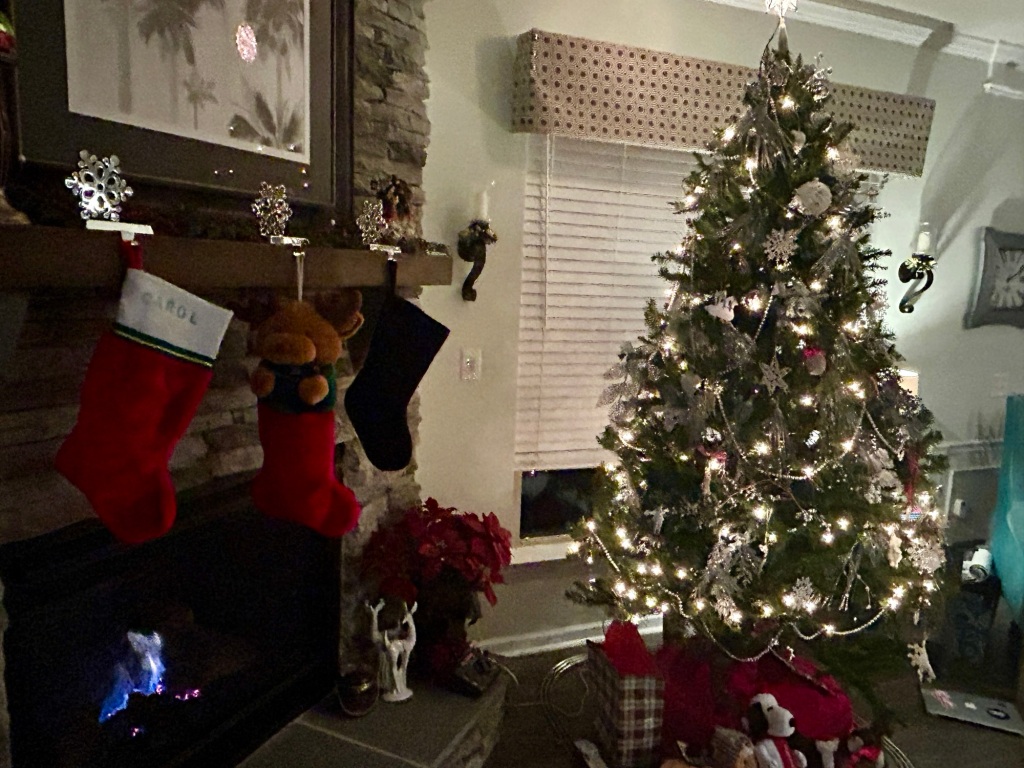
I recently finished decorating our Christmas tree in the living room, and I often stop what I am doing and stare at it. Its white lights and the decorations, many gifted by friends, bring me solace. I gaze at the tree while Neil Diamond sings “O Holy Night” from our CD player (yes, we still have one of those). I am aware of my personal peace disruptions holding onto my spirit, creating a sense of melancholy. I have several disruptions: my dysfunctional relationship with siblings; the absence of my parents, who passed in 2020; the worries about my adult daughter finding a job she is happy with; concerns as the United States prepares for a president taking over in January who I believe to be bad for our nation; and sadness about people who lost everything two months ago in my home-town of Asheville, North Carolina due to hurricane Helene. But, as I stare at the tree, I consciously attempt to focus on what is in front of me and the ambiance of the decorated tree and room with the turned-on gas fireplace, adding an extra layer of warmth. I turn inward to my core self, allowing Neil Diamond’s beautiful voice to flow over me and observe the tree’s beauty. I will the peace disruptions to leave. “Go,” I tell them, “Sit somewhere else for a while.” And I feel their weight lessen. I take in a cleansing breath of relief, close my eyes, look inwards towards my spirit, and allow myself to experience a sense of—

–well, peace.

Is this what is meant by, Let go and let God?

Is the lack of peace a need for control? Can I loosen my grip and just be; let Neil Diamond’s voice flow over me and let this moment, brief though it is, be an internal holy?

My attempt to turn inward towards the core of my spirit seems to make all the difference as I take a deep breath, absorb the season’s spirit, and thank the tree, my spirit within, and Neil for helping me enjoy peace, if only for a brief moment. Turning inward connects us with our internal higher power, whom I call God. This is where the peace resides—within us. We have had that spiritual being and power within us all along, no sparkly red shoes required.

I inhale a deep breath of understanding, tap my heels together, and to the tree, Neil, and my internal spirit, I utter a simple breath prayer of –

Shalom.

Hope

Hope Is A Good Thing, Maybe The Best of Things, and No Good Thing EVER Dies

The above is a quote from a favorite movie of mine, Shawshank Redemption. In the film, a banker named Andy (played by Tim Robbins) has his wonderful, successful life turned upside down. He can’t control the narrative of his future when he is wrongly accused of his wife’s murder and ends up in prison. When Andy arrives and enters the dark halls of the prison for the first time, the movie introduces the viewer to a seasoned inmate named Red (played by Morgan Freeman). Red surmises that, of the multiple prisoner-newbies arriving, Andy will be the one who will emotionally implode on the first night of his new life. 

But Andy doesn’t. Not that night or anytime during his tenure, which was supposed to be a life sentence. He held onto his calm demeanor and used his “tools” to survive the harshness of his new reality. His tools included knowledge and personality that enabled him to get close to the enemy within—the corrupt warden; he persevered with patience as he whittled away with a small tool to carve a hidden pathway through the wall of his cell to escape. He connected with Red, who became a friend. With these tools, he managed and then escaped the unfairness of his reality. He exposed the corrupt prison warden and found his way to a remote beach to work on a boat, where his friend, Red, once released from prison, eventually joined him.

I do love a happy ending when the good guys or gals prevail.

Unfortunately, life is not a film with predictable happy endings. In our reality, we have challenges that change the narrative of our lives, providing many unknowns and causing us to experience a sense of helplessness.

As I write this, we U.S. citizens are one day away from Thanksgiving, when we gather to celebrate our American origins and exude thanks for all our gifts. Yes, there is much to be thankful for: health, home, food, friends, family, and more. We will also start the Christian Advent season this Sunday, starting with the theme of hope.

But –

In this United States of America, 21 days since we elected a new president, many of us are dealing with how we have had life turned upside down, and controlling the narrative of our future seems out of reach. Kamala Harris, who ran for president on the democrat platform, had a to-do list that included a sound economic plan. She wanted women to live if a pregnancy went wrong. She projected a sense of hope for our future. Sadly, she lost the election to he-who-I-will-not name. He had a revenge list, has lied and divided this country unlike anything our recent history has experienced, has a questionable economic plan, and has broken many laws, including trying to sabotage our democracy when he lost the election in 2020. I truly believed hope would prevail over hate. I sobbed along with my 30-year-old daughter at the outcome. I have yelled at the universe and wondered, where are people’s morals? I have questioned how this can be happening. All the analysis of how this happened won’t change the fact that we, our country, are here. 

Where is here? 

I don’t know. 

Is it a new norm of divisiveness with others, an economy that favors the rich, women dying because they can’t have a medical procedure when a pregnancy goes wrong, Christian Nationalism domination, weakened government, and extreme hardship for the marginalized?

Since the election, I have gone from distraught grief to dismayed anger with a recent emergence of calm. Well, most moments, anyway, are calm. It’s still a work in progress. With the calm, I am holding my anxiety parts of myself together and not imploding. Unlike Andy’s first night in a new life, I did implode. But I am beginning to find my “tools” to navigate this different reality. I am staying continually connected to like-minded friends. I am finding ways to use my knowledge and personality to find resources to do what I can do when I can do it. I realize that patience is required as we whittle away at the wall of divisiveness this country will endure and the challenging pathway we must navigate. There will be wrongs to right, and I am committed to doing what I can in my small corner of the world. I will manage this new reality as best I can with the aspiration we will arrive at a place where we can be filled with hope for a better future.

Although these next years will not be easy, this country has persevered with many ebbs and flows of wrongs and rights throughout its history. Most people have aspired and will aspire to the greater good. I don’t particularly like that we are living in history-making times. But here we are. When tough times have historically challenged us, people like you and me have made a difference. Some stories will be remembered in history books, and others will be appreciated by people affected by how we acted towards and for them. We, the people, will keep hope alive because it is a good thing, maybe the best of things. And no good thing ever dies.

Harmony

Optimism

Perseverance

Expectation

Carol Injaychock

11/27/2024

Hibiscus


My mom’s favorite flower was the Hibiscus.
It’s no wonder, given they are symbolic of:

  • Persistence
  • Courage
  • Strength
  • Resilience

However, I doubt she loved them because of their symbolism.

It is more probable she loved them for their:

  • Persistence to propagate throughout the summer.
  • Courage to create buds to bloom beautifully towards the world around them.
  • Strength to sustain vibrant colors which enhanced the natural beauty of green trees and the green-grassy-yard.
  • Resilience to ruin from pesky pests.

She would often hold a bloom against her face, feeling its velvety texture, and proudly pose for a photo. She grew many types of flowers, but none brought her as much pride and joy as her Hibiscus.

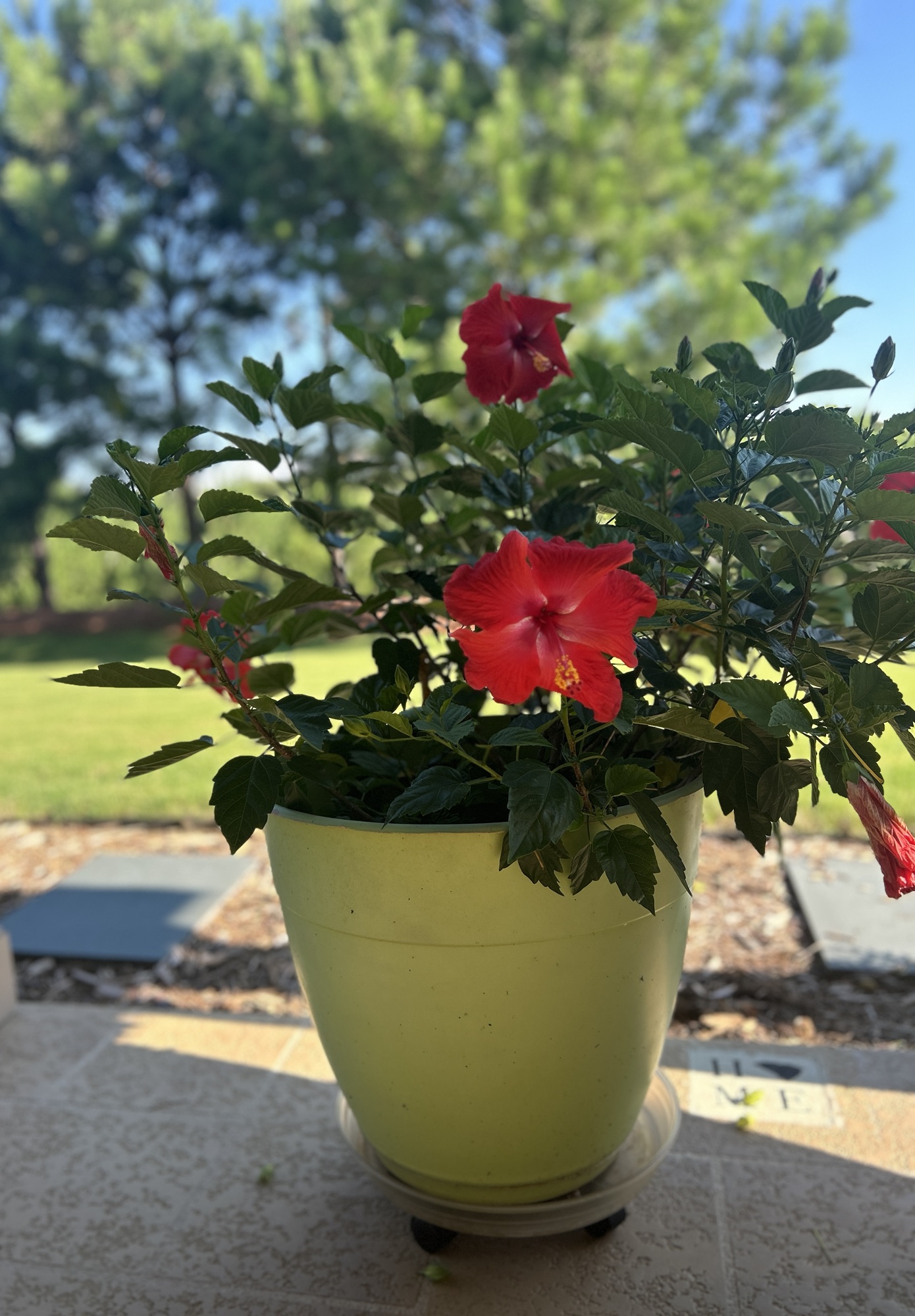
As I look at my potted hibiscus on my back porch, with its velvety soft pedals producing abundantly, I embrace the spirit of my mom. She was one of the most courageous, persistent, strong, and resilient women I ever knew. I am proud I could call her, Mom. Even though she may have not given much thought to their symbolism, these flowers provide a profound symbolism for me — of her.